Hidden Corners Of The West Village To Know Before You Buy
July 9, 2026
July 9, 2026
If you picture the West Village as one look and one lifestyle, you may be surprised the first time you walk it block by block. This neighborhood is full of tucked-away courts, bent streets, rear houses, and small enclaves that can feel completely different from the avenue or corner you just left. If you are thinking about buying here, understanding those hidden corners can help you spot the right fit and avoid surprises. Let’s dive in.
The West Village is not a uniform neighborhood. It is better understood as a patchwork of irregular blocks, small lanes, and intimate residential pockets that sit alongside busier and more varied stretches.
That layered feel comes from history. Parts of the area predate Manhattan’s grid, so the bends, forks, and leftover courtyards are built into the streetscape. In the Greenwich Village Historic District, which was designated in 1969 and includes more than 2,000 buildings across 65 blocks, that older pattern is especially visible.
The neighborhood also changes as you move west. On the far western edge, the built environment mixes converted lofts, 19th-century row houses, the West Village Houses complex, and newer residential buildings. That is a big reason one block can feel enclosed and quiet while the next feels more open and varied.
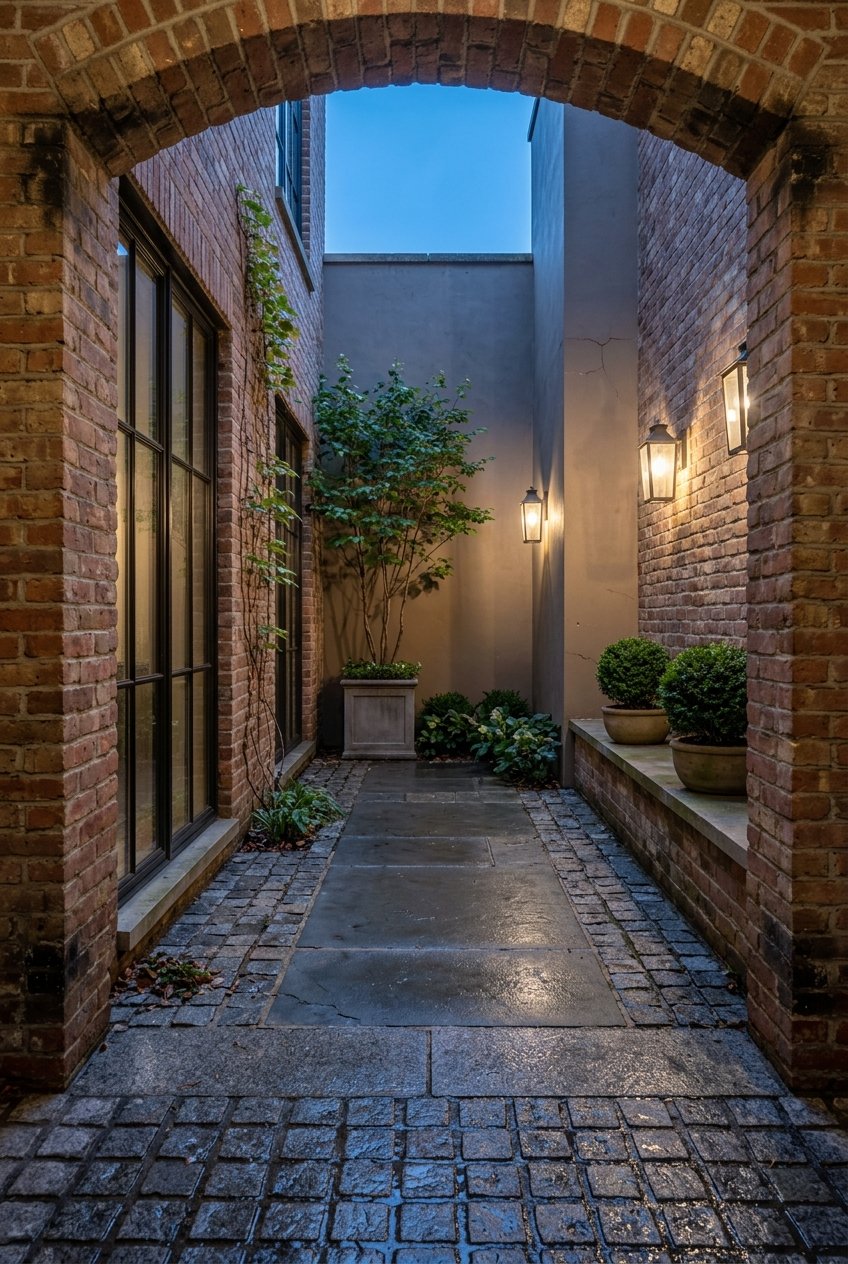
Some of the West Village’s most memorable addresses are hidden because they are not typical through-streets. Instead, they may sit behind a front building, at the end of a short lane, or inside a courtyard reached through a gate or side passage.
A key term to know is backhouse. Village Preservation describes backhouses as rear residences accessed through a front building, courtyard, side passageway, tunnel, or secondary entrance, sometimes marked with a 1/2 address. Many began as stables, carriage houses, or rear tenements before becoming homes or studios.
For buyers, that means charm often comes with a different layout, access pattern, or sense of privacy than you would expect from a standard street-facing property. In the West Village, square footage tells only part of the story.
Grove Court is one of the clearest examples of a tucked-away West Village setting. Located behind 10 and 12 Grove Street, it is reached through a private gate and triangular courtyard, which immediately sets it apart from the public sidewalk experience outside.
The houses there were built in 1852 to 1854 as workingmen’s cottages in the rear yards of the front houses. Over time, the court became attractive to artists and other Village residents. For a buyer, the appeal is easy to understand: it feels private, scaled down, and distinctly separate from the surrounding street grid.
Just off West 10th Street, Patchin Place is a gated enclave with a strong sense of enclosure. It has long been associated with artists and writers, and Village Preservation notes that e.e. cummings lived and worked there.
If you are searching for a block that feels hidden in plain sight, this is one of the best examples. Its tucked-away entrance and compact scale create a quiet atmosphere that many buyers picture when they think about classic Village charm.
75 1/2 Bedford Street is one of the neighborhood’s best-known micro-lot houses. Built on a former courtyard or alleyway between older houses, it is only 9.5 feet wide.
This address is a reminder that West Village housing stock can be unusually creative and compact. A 1920s renovation added casement windows associated with artists’ studios, reinforcing the kind of architectural character that makes these hidden corners so memorable.
The houses at 39 and 41 Commerce Street offer another version of the hidden-corner effect. Built in 1831 to 1832, they later received mansard roofs in the 1870s.
What stands out here is the preserved yard setting and the unusual sense of openness around them. That combination gives the block a rare feel within Manhattan and shows how block character in the West Village can depend as much on spacing and setting as on architecture alone.
St. Luke’s Place is a one-block stretch of Leroy Street with a gentle bend, 15 brick Italianate houses, brownstone trim, decorative ironwork fences, and a shaded park opposite. It is one of the strongest examples of a cohesive residential block within the historic district.
For buyers, this is the kind of block that feels composed and visually consistent. If your goal is a quiet residential atmosphere with a clear architectural identity, St. Luke’s Place is an important street to know.
The far West Village has a different personality. Around Weehawken Street, Christopher Street, Charles Lane, Washington Street, and West Street, the neighborhood becomes more mixed in scale and building type.
The Weehawken Street Historic District is a 14-building enclave spanning 1830 to 1938 and preserves a rare waterfront pattern of dwelling, industry, and commerce. Nearby blocks also include converted lofts, row houses, the 42 six-story buildings of West Village Houses, and newer residential buildings. If you are deciding between a tucked-away Village feel and a looser, more urban setting, this area is especially important to walk carefully.
In these hidden corners, you are most likely to encounter early 19th-century row houses, later Italianate homes, mews buildings, carriage-house and backhouse conversions, and small courtyard enclaves. Some began as service structures or stables and were later adapted into homes or studios.
Others were designed from the start as small houses tucked behind the main street wall. That variety is part of the appeal, but it also means no two properties should be evaluated in exactly the same way. Access, light, privacy, and exterior constraints can vary a lot even within a short radius.
On the far west edge, the building stock becomes more mixed and more recent. As a result, the ambiance often shifts from intimate and enclosed to broader and more urban.
If you are prioritizing a tucked-away feel, the blocks and enclaves that tend to read as quietest are the gated courts, dead-end lanes, and small interior blocks. Grove Court, Patchin Place, Bedford Street’s small-lot houses, Commerce Street’s preserved yard setting, and St. Luke’s Place are among the best-known examples.
That does not mean every home on those blocks feels identical. It does mean the physical layout itself often creates a more sheltered atmosphere than a standard through-street.
If you prefer more variety in scale and streetscape, look closely at the far west waterfront edge around West Street and Washington Street. According to New York City Planning, this is where old industrial traces, West Village Houses, and later residential buildings coexist most visibly.
For some buyers, that mix is a plus. For others, it may feel less like the postcard version of the West Village they had in mind. The key is to match the block’s character to your priorities rather than relying on the neighborhood name alone.
In the West Village, hidden charm can come with practical questions. Before you make an offer, it helps to confirm not just the apartment or house, but also the property’s relationship to the block and historic rules.
Here are a few smart items to verify:
The Landmarks Preservation Commission regulates exterior changes in designated historic districts, and permits are required for work affecting landmarked exteriors and, in some cases, interiors. If you are considering updates, these details matter as much as finishes and floor plan.
Buying in the West Village is often a block-by-block decision, not just a neighborhood decision. Two homes with similar size or price can offer very different living experiences if one sits on a tucked-away court and the other is on a more mixed far-west block.
That is where careful guidance matters. When you understand the difference between a mews-like setting, a rear house, a preserved row house block, and a mixed waterfront edge, you can buy with more confidence and fewer surprises.
If you are exploring the West Village and want help comparing hidden-corner charm with day-to-day practicality, Fainna Kagan can help you evaluate the details that matter most and schedule a private consultation.
Stay up to date on the latest real estate trends.
Known for her commitment and responsiveness to her clients, Fainna Kagan has repeatedly set records on the highest selling priced properties. Connect with her today!