Upper West Side Home Values by Brownstone, Co-op, and Condo
June 18, 2026
June 18, 2026
Choosing between an Upper West Side brownstone, co-op, or condo is not just about taste. It is about how you want to live, how much flexibility you need, and how much building responsibility you are willing to take on. If you are weighing these options in one of Manhattan’s most established residential markets, this guide will help you compare price, process, monthly costs, and risk with more confidence. Let’s dive in.
The Upper West Side has a very specific housing mix. It is known for its park-bounded setting, strong transit access, and a housing stock shaped heavily by prewar apartment buildings, with a smaller supply of townhouses and newer condo product mixed in.
That market context matters when you compare property types. StreetEasy’s 2025 neighborhood snapshot showed a median sale price of $1.2 million and 56 median days on market, while PropertyShark’s April 2026 snapshot showed a $1.9 million median sale price, $1,677 per square foot, and 146 transactions. Those numbers reflect different time periods and methodologies, which is a good reminder to compare similar properties when making a decision.
Before you compare finishes, layouts, or views, it helps to understand what you are actually buying. On the Upper West Side, the legal structure behind the property often shapes your experience as much as the apartment itself.
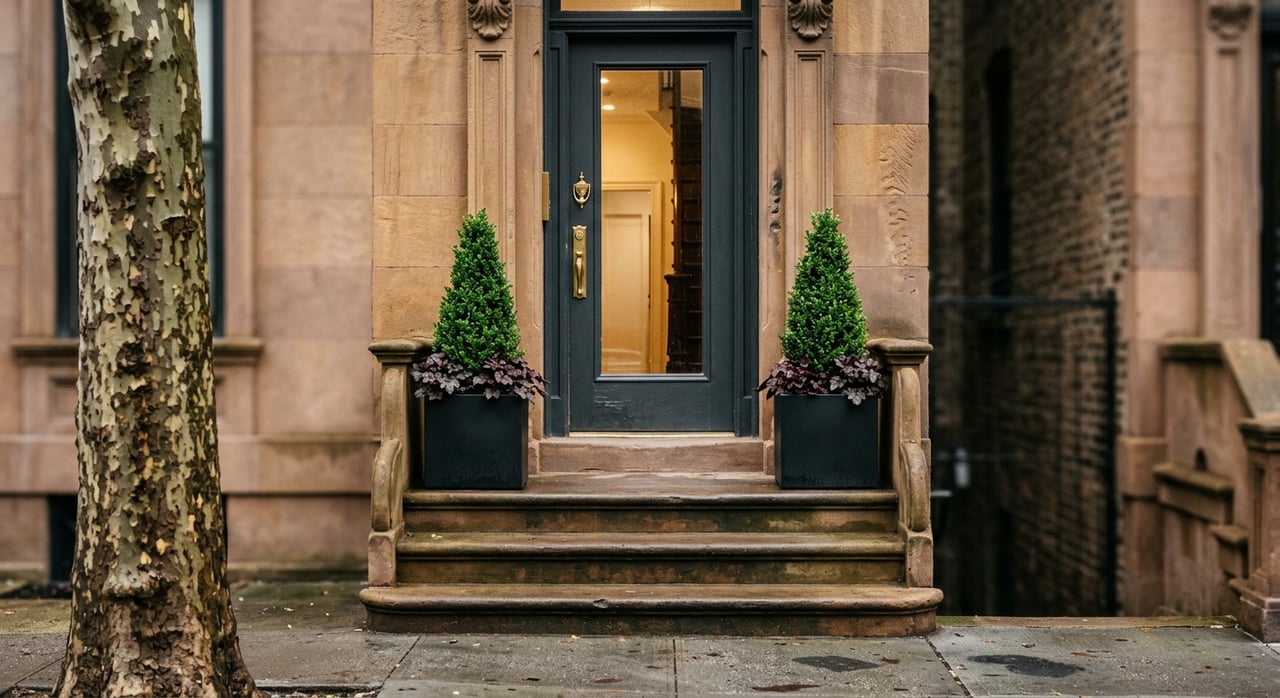
When buyers talk about brownstones on the Upper West Side, they are often referring to a broader townhouse or rowhouse category, not just one façade material. Landmark documentation shows the neighborhood developed with a range of rowhouse styles, including Renaissance Revival, Beaux-Arts, and Colonial Revival, rather than one uniform brownstone type.
In practical terms, a townhouse purchase usually means you are taking on far more direct responsibility for the whole building. That can appeal to buyers who want privacy, space, and control, but it also means you are more exposed to maintenance decisions, repair costs, and renovation planning.
In a co-op, you do not own the apartment in the same way you would own a condo unit. According to the New York Attorney General, you purchase shares in a corporation tied to a specific apartment, receive a proprietary lease, and pay maintenance charges based on your shares.
That structure is one reason co-ops often come with more review and oversight. Boards are made up of other shareholders and operate under bylaws, proprietary leases, and house rules, which can affect everything from purchase approval to subletting and building operations.
A condo works differently. Under New York condominium regulations, you own the unit outright, also own an interest in the common elements, and pay common charges. You can also separately mortgage the unit.
That usually gives condo buyers a more straightforward ownership structure. Restrictions can still exist, and buyers should review them carefully, but condos generally offer more flexibility than co-ops when it comes to future leasing, resale, and overall use.
On the Upper West Side, these three property types often sit in very different price bands. That does not mean one is always the better deal. It means each serves a different buyer need.
PropertyShark’s April 2026 data showed a median sale price of $6.1 million for houses on the Upper West Side. That is well above the same snapshot’s $2.4 million median for condos and $1.4 million median for co-ops.
There is one important caveat. That monthly house median came from just one recorded house transaction, so it is best read as a thin-sample signal, not a stable long-term benchmark. Even so, it supports the broader point that Upper West Side townhouses are rare and usually command premium pricing.
In the same April 2026 snapshot, co-ops posted a $1.4 million median sale price across 91 transactions. That makes them the most common and generally the most accessible ownership type among the three.
For many buyers, that lower price is what opens the door to the neighborhood. But the lower sticker price should always be weighed against board review, house rules, and monthly maintenance.
Condos reached a $2.4 million median sale price across 54 transactions in PropertyShark’s April 2026 data. That price gap versus co-ops often reflects the added flexibility of condo ownership.
If you want a property that may be easier to rent later, easier to finance separately, or less board-intensive in practice, paying more upfront for a condo may align with your goals. For some buyers, that flexibility is worth the premium.
A purchase price only tells part of the story. On the Upper West Side, monthly carrying costs can shape affordability just as much as the initial number on the contract.
With a townhouse, there is no building-wide board or common-charge system absorbing the day-to-day realities of ownership in the same way as a co-op or condo. You are effectively underwriting the condition and upkeep of the entire property more directly.
That means expenses can be less predictable. Roof work, façade repairs, plumbing upgrades, window replacement, heating systems, and electrical updates can all become your responsibility, and those costs may arrive unevenly rather than as one stable monthly charge.
A co-op’s lower purchase price can come with monthly maintenance charges and a more involved approval process. Maintenance is tied to your share allocation, and the building’s operating structure can affect what you pay over time.
For many owner-occupants, that tradeoff works well. If you value stability and are comfortable with board oversight, a co-op can be a smart fit, but you should look beyond the entry price and study the ongoing carrying costs carefully.
Condos often present monthly costs as common charges plus separate real estate taxes. That can make the expense structure easier to read at first glance, though it does not mean the total cost is always lower.
Tax treatment matters here. New York City’s Department of Finance says co-op and condo developments may receive the co-op and condo tax abatement, with benefits ranging from 17.5% to 28.1% depending on the building’s average assessed value, and the board or managing agent applies on behalf of the development.
For many Upper West Side buyers, the real decision comes down to what kind of control they want and what kind of friction they are willing to accept. That is where these property types start to feel very different.
A townhouse usually gives you the most control over your space and the building itself. You are not working within the same board-managed structure that shapes many co-op and condo experiences.
That independence can be incredibly attractive, especially if you want more space, fewer shared walls, or a long-term hold with character. The tradeoff is that you also take on more direct responsibility for systems, maintenance, and renovation exposure.
Co-ops tend to work best for buyers who prioritize price discipline and plan to use the home as a primary residence. The structure can support a strong sense of consistency, but it can also create more friction around approvals, sublets, and house-rule compliance.
If you want a smoother fit with co-op ownership, read the offering plan, financials, and house rules with care. This is an area where strong board-prep guidance can make a real difference in your buying experience.
Condos usually appeal to buyers who want more future options. You may want the possibility of renting the unit later, a less restrictive approval environment, or a structure that feels more straightforward from an ownership standpoint.
That flexibility is often why condos command higher prices than co-ops in the same neighborhood. On the Upper West Side, many buyers are willing to pay for optionality.
No matter which path you are considering, due diligence matters. On the Upper West Side, building age, condition, and governance can all affect value just as much as location and square footage.
The New York Attorney General advises buyers to pay close attention to the condition of roofs, façades, windows, HVAC, plumbing, and electrical systems. On the Upper West Side, where many properties are older and architectural character is part of the appeal, that guidance is especially important.
For apartment buyers, that means understanding the building’s maintenance history and likely capital needs. For townhouse buyers, it means looking hard at what you may need to repair, replace, or modernize after closing.
For co-ops and condos, buyers should carefully review offering plans, recent financials, and board materials where available. Those documents can help you understand building operations, restrictions, and possible future costs.
This matters because the right property on paper can still be the wrong fit if the building’s rules or financial profile do not align with your goals. A lower purchase price can lose its appeal quickly if the structure creates obstacles you did not expect.
If you want a simple way to frame the choice, think beyond square footage. You are comparing control, approval risk, monthly carrying costs, maintenance exposure, and future flexibility.
A brownstone may be right for you if you want privacy, space, and direct control, and you are prepared for the responsibilities that come with owning the full structure. A co-op may be right if you want a lower entry point and are comfortable with board review and building rules. A condo may be right if you are willing to pay more for a more flexible ownership model.
On the Upper West Side, those differences are not small details. They are the foundation of the buying decision.
If you are comparing these options in real time, working with someone who understands board dynamics, townhouse risk, and neighborhood-specific pricing can save you time and help you avoid expensive missteps. To talk through your options with a data-driven, high-touch Upper West Side expert, schedule a private consultation with Fainna Kagan.
Stay up to date on the latest real estate trends.



Known for her commitment and responsiveness to her clients, Fainna Kagan has repeatedly set records on the highest selling priced properties. Connect with her today!