Upper West Side Family Living for Manhattan Parents
May 28, 2026
May 28, 2026
If you’re thinking about raising a family in Manhattan, the Upper West Side probably keeps coming up for good reason. It offers something many parents want but rarely find in one place: parks, transit, cultural institutions, and a daily routine that can feel both energetic and manageable. If you want a clearer picture of what family life here actually looks like, this guide will walk you through the trade-offs, the advantages, and the details that matter most. Let’s dive in.
The Upper West Side has a strong family presence, but it is not a family-only neighborhood. Furman Center data show 224,282 residents in 2023, with 21.4% of households including children under 18. At the same time, 20.2% of residents are age 65 and older, and single-person households made up 46.5% in 2024.
That mix shapes the neighborhood in a practical way. You get a place where stroller traffic, longtime residents, and solo renters all share the same blocks, shops, and transit routes. For many buyers, that creates a more balanced city feel than a neighborhood built around just one life stage.
The setting also plays a big role in its appeal. The neighborhood sits between Central Park and Riverside Park, and major destinations like Lincoln Center and the American Museum of Natural History are part of everyday life here, not just special-occasion outings.
If you picture family life here, it helps to start with the housing stock. The Upper West Side is overwhelmingly apartment-oriented, with 130,224 housing units counted in 2024 and 6,131 new units added in buildings with four or more units between 2010 and 2024. Townhouses and brownstones exist, but the neighborhood is still defined by apartment living.
That matters because your home search will usually center on layout, building rules, and livability rather than lot size or private outdoor space. On the Upper West Side, a great family home is often a well-planned apartment in the right location, not necessarily a traditional house.
For growing households, apartment size is one of the biggest questions. Furman found that the largest share of studios rents in the $2,000 to $2,500 range, one-bedrooms in the $3,000 to $4,000 range, and two- and three-bedroom apartments mostly above $4,000.
In plain terms, family-sized space exists, but you should expect to pay for it. This is one of the highest-rent markets in the city, and that cost gap between smaller and larger units is important if you are planning ahead for a second child, remote work, or live-in help.
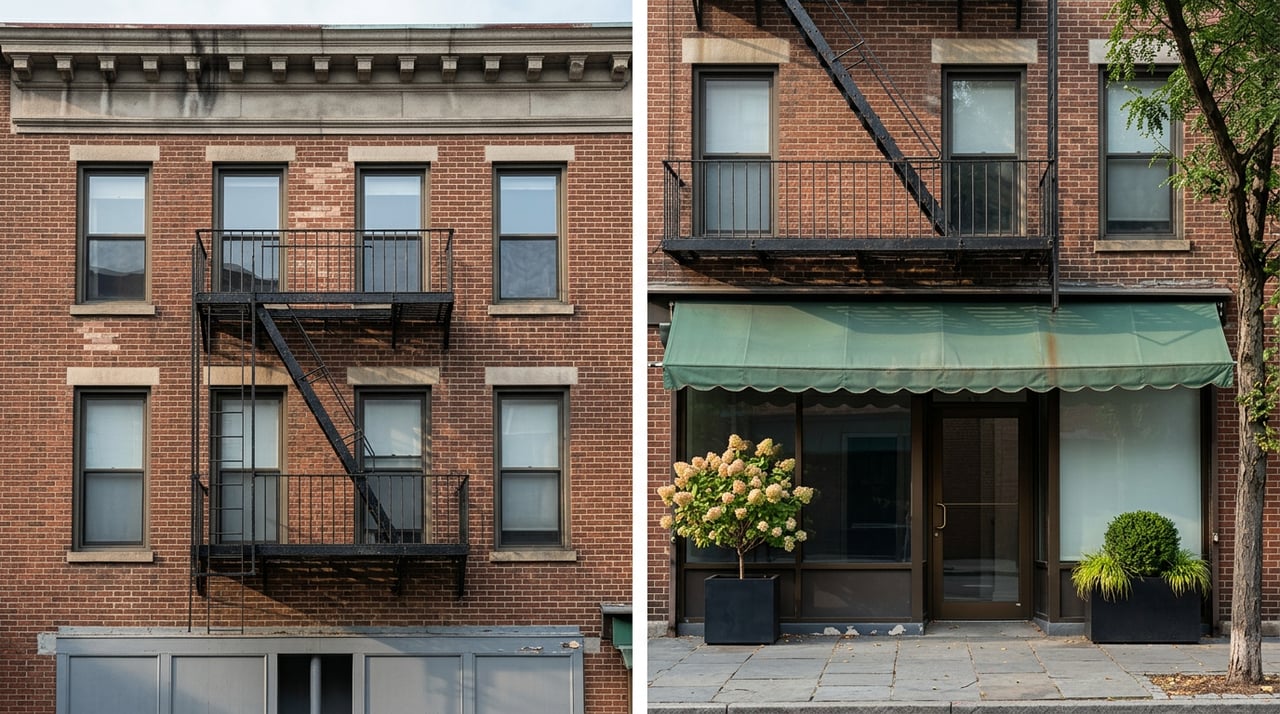
Not all apartments live the same way on the Upper West Side. The neighborhood’s historic apartment houses often have more formal floor plans, with separate public rooms, private rooms, and service areas. That is one reason many prewar homes here may include larger entry foyers, separate dining rooms, or more divided living spaces.
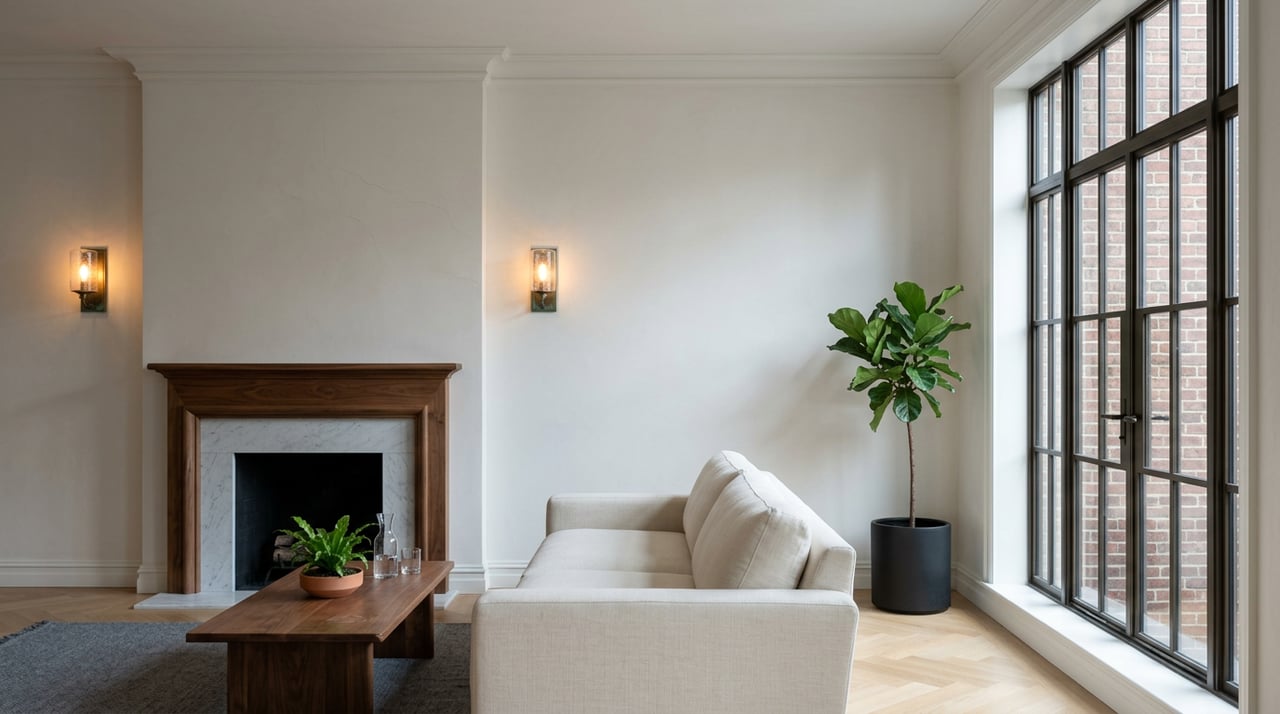
For some families, that kind of layout is a real advantage. A segmented floor plan can make it easier to create distinct areas for sleeping, working, dining, and play. For others, the trade-off may be an older condition or a layout that feels less open than newer construction.
One of the neighborhood’s biggest strengths is access to outdoor space. Central Park borders the east side of the neighborhood, while Riverside Park runs along the Hudson River side, giving families two major park systems within easy reach.
Central Park’s west side includes a cluster of playgrounds and family-friendly spaces, including Heckscher Playground, Diana Ross Playground, and additional playgrounds at 68th, 77th, 97th, 100th, 108th, and 110th Streets. Some include water features, accessible surfaces, or ADA-accessible comfort stations.
Riverside Park adds even more room to spread out. The park stretches more than 400 acres from 59th to 181st Street and includes 16 playgrounds, according to Riverside Park Conservancy.
For many parents, Riverside Park is more than just a place to visit on weekends. It can become part of your weekly routine, whether that means a quick stop after school, a playground meetup, or a morning walk with younger kids.
Hippo Playground is one of the clearest examples of that family focus. It includes a parkhouse, restroom, swings, slides, a spray shower, picnic tables, a sand pit, and even a sledding hill. The annual Hippo Spring Fair also brings free community programming like games, crafts, music, and a petting zoo.
Family life in the city is easier when you have strong indoor options nearby. On the Upper West Side, that includes libraries, museum spaces, and after-school programming that can support everyday routines.
The New York Public Library’s Bloomingdale and Riverside branches both include children’s spaces. NYPL After School is a free drop-in program for children ages 6 to 12, offered Monday through Thursday when school is in session, with homework help and enrichment activities.
The American Museum of Natural History also adds to the neighborhood’s day-to-day appeal. Its Discovery Room, located at 200 Central Park West, is designed for children ages 4 to 12 and offers weekday morning drop-in hours for pre-K children ages 0 to 4.
If schools are part of your housing decision, details matter. The New York City Department of Education places Lincoln Square and the Upper West Side in District 3, and the DOE advises families to use its address-based school search because school assignment is tied to the home address.
That means you should avoid broad assumptions based on the neighborhood name alone. Two homes on different blocks can lead to different school-related planning questions, which is why address-level due diligence is so important when you are buying or renting with children.
The DOE also states that every district has 3-K programs. For families with younger children, that can be a useful starting point as you think through both immediate needs and longer-term planning.
Public school options on or near the Upper West Side include P.S. 163 Alfred E. Smith, M.S. 243 Center School, West End Secondary School, and Success Academy Charter School - Upper West. Taken together, these examples show that the neighborhood includes elementary, middle, and secondary-grade options.
The key is to research based on your household’s needs and the specific address you are considering. In a neighborhood where inventory, building type, and zoning can vary block by block, the best approach is a careful one.
The Upper West Side is one of those neighborhoods where car-free living is not just possible, but typical. Furman’s 2024 data show that 88.5% of commuters travel without a car, and the mean travel time to work is 31.2 minutes.
For families, that translates into real convenience. School drop-offs, museum visits, after-school activities, and work commutes can all happen within a transit-rich environment that supports a busy weekday schedule.
The MTA map shows a dense subway network along the west side, plus crosstown bus routes like the M57, M72, and M79-SBS. The MTA also states that most riders pay $2.90, and up to three children under 44 inches tall can ride free with a fare-paying adult on the subway and eligible buses.
For many households, the Upper West Side works well on paper but gets harder when the budget conversation begins. The area combines high rents, strong demand, and limited family-sized inventory at more approachable price points.
That tension shows up in household data too. Furman reported that 22.4% of renter households were severely rent-burdened in 2023, while NYC Health reported 39.7% of households as rent-burdened.
The second major trade-off is variation. Because the neighborhood includes a large share of older housing stock, two apartments with the same bedroom count can feel very different in layout, storage, natural light, and overall condition.
NYC Health also reported household crowding at 3.9%, which is another reminder that neighborhood reputation should not replace apartment-level review. If you are searching here, it helps to evaluate each home carefully, including building condition, floor plan, and how the space will function for your real daily life.
The Upper West Side can be a strong fit if you value walkability, access to parks, libraries, cultural institutions, and reliable transit more than private outdoor space. It tends to appeal to buyers and renters who want a family-oriented routine without giving up the energy and convenience of Manhattan living.
At the same time, it is a neighborhood where planning matters. Budget, exact address, apartment layout, and building details all play an outsized role in how well your next move will work.
If you are weighing whether the Upper West Side fits your family now or in the next few years, a focused search can save time and avoid costly missteps. For tailored guidance on co-ops, condos, townhouses, and family-friendly buying opportunities on the West Side, schedule a private consultation with Fainna Kagan.
Stay up to date on the latest real estate trends.

Known for her commitment and responsiveness to her clients, Fainna Kagan has repeatedly set records on the highest selling priced properties. Connect with her today!